
A Restaurant P&L Should Tell You
What to Fix This Week.
Books built around prime cost, tips reported correctly, and payroll and tax handled by the same CPA firm, for restaurant owners with one location or several.
The Challenge
A restaurant is not a business that sells one thing at a steady margin.
A restaurant buys perishable inventory daily, staffs to a forecast that changes by the shift, and collects money in a dozen forms, including tips it does not own. A standard small business P&L flattens all of that into categories too broad to act on, and arrives weeks after anyone could do something about it.
- A P&L that lands weeks after the month it describes
- One cost of goods line, so food cost and beverage cost cannot be told apart
- Labor shown as wages, without the payroll taxes and benefits that make it a real cost
- Sales booked from bank deposits, which hide card fees and delivery platform commissions
- Tips reported unevenly, with credit card and cash tips treated as if the rules differed
- Automatic gratuities on large parties treated as tips
- Several locations rolled into one report, so the store that is losing money is invisible
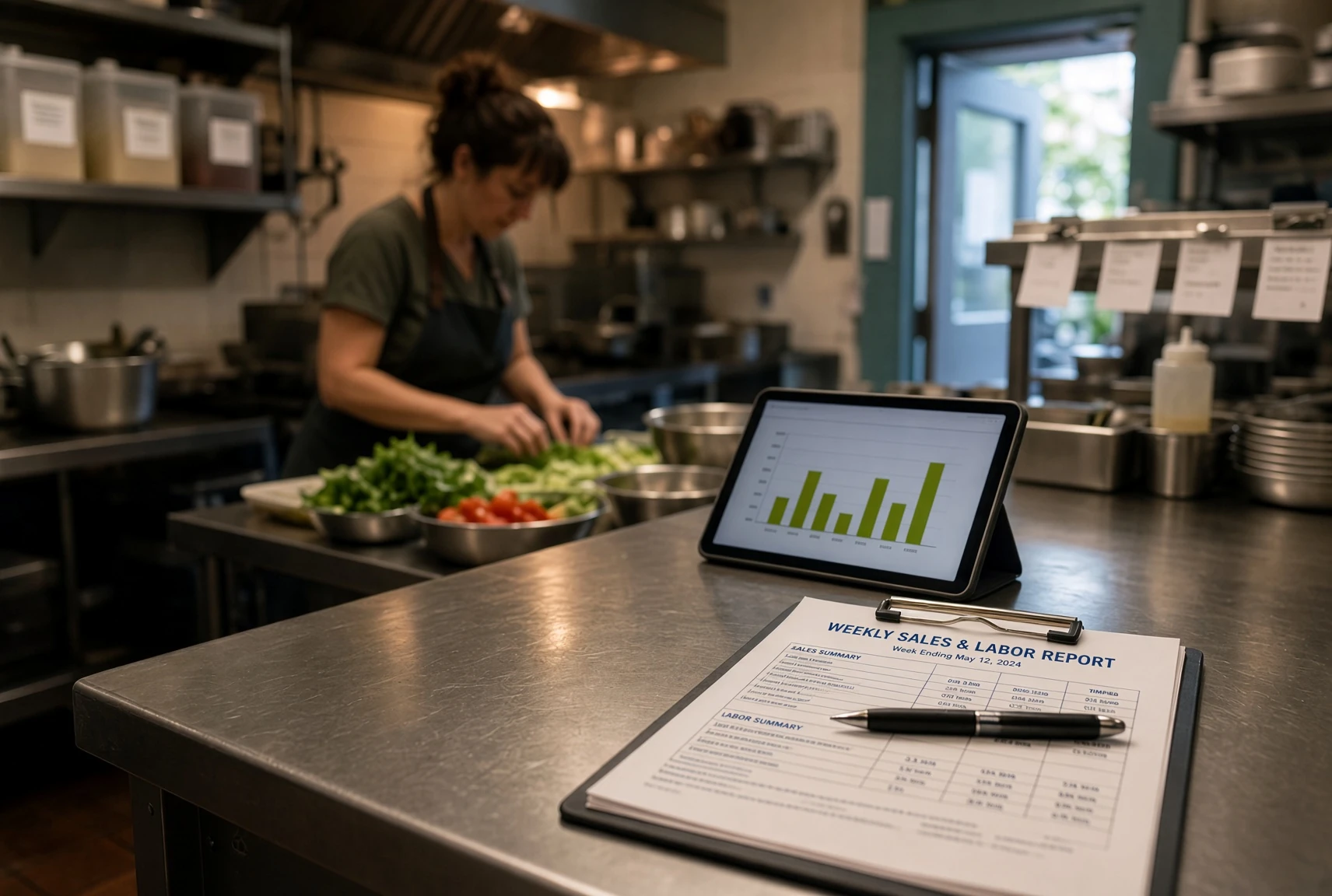
- Weekly numbers that arrive while the week is still recoverable
- Food and beverage split, each with its own cost percentage
- Labor including employer payroll taxes and benefits, so prime cost is real
- Sales booked from the POS, with delivery platforms in their own accounts
- Tips captured, reported and filed the same way every time
- Service charges kept out of tips, where they do not belong
- Every report run two ways: consolidated for the bank and the return, and by location for the operator
What's Included
Accounting, payroll and tax from one firm, built around the numbers you run on.
Restaurant work is the firm's standard services arranged around one set of numbers, because tips, labor and tax all connect. Fees follow the scope, such as how many locations and whether payroll is included, and the published pricing shows the ranges before you call.
What the first few months look like.
Review the books you have
We look at how the P&L is built today, how sales and labor reach the books, and how tips and payroll are handled. This shows whether the report is kept for the tax return or for running the restaurant.
Rebuild the chart of accounts
Food and beverage separated, labor with its payroll taxes, delivery platform accounts, state tax liability accounts and a location structure. Done once and then left alone, so every comparison afterward means something.
Bring sales and labor in on a daily rhythm
Sales come in from the POS as a daily journal, and labor from payroll, so the numbers do not wait for a month-end pile.
Close weekly, then monthly
The weekly report puts prime cost in front of you on a Monday. The monthly close reconciles accounts, books accruals and trues up inventory.
Handle tips deliberately
Tip reports collected, withholding and deposits made, the Form 8027 and Form 8846 questions answered with data that supports them.
Plan taxes and cash through the year
Quarterly projections for the owner and entity, and a cash forecast when a tight stretch is coming.
One firm for the books, the payroll and the return.
Tips connect everything
Tip data feeds payroll, payroll feeds labor cost, labor cost feeds prime cost, and the same data supports the employer credit on the return. When one firm does all of it, nothing gets re-keyed between three offices and nobody waits on a third party for an answer.
The number arrives while you can still act
The firm's published restaurant guide makes the case for a weekly close in detail, and the engagement is built around it. A report that lands weeks late is a compliance document. A report that lands on Monday is a management tool.
Priced before the work starts
Fixed monthly ranges are published, and there is no hourly billing and no invoice arriving after a call you thought was included.
“We have been with Darshi's firm for 6 years and it has been a great experience. She handles everything from our business and personal tax preperation to monthly bookkeeping for our restaurant. We highly recommend Darshi Kasotia CPA PLLC.”
More from clients is on the reviews page.
Restaurant Accounting, Based in Sugar Land
Documents, sales reports and payroll data move electronically and meetings happen by video or phone, so the work runs the same for a restaurant down the road as for one across the metro. For the local picture, see our Sugar Land CPA page, or the full list of communities we serve. For how the relationship runs once you start, how the engagement works covers documents, contact and the monthly rhythm.
FAQ
Questions about restaurant accounting?
What restaurant owners usually ask before the first call.
Last reviewed: October 2026